Faithland Discernment about Affordable Housing Development Continues

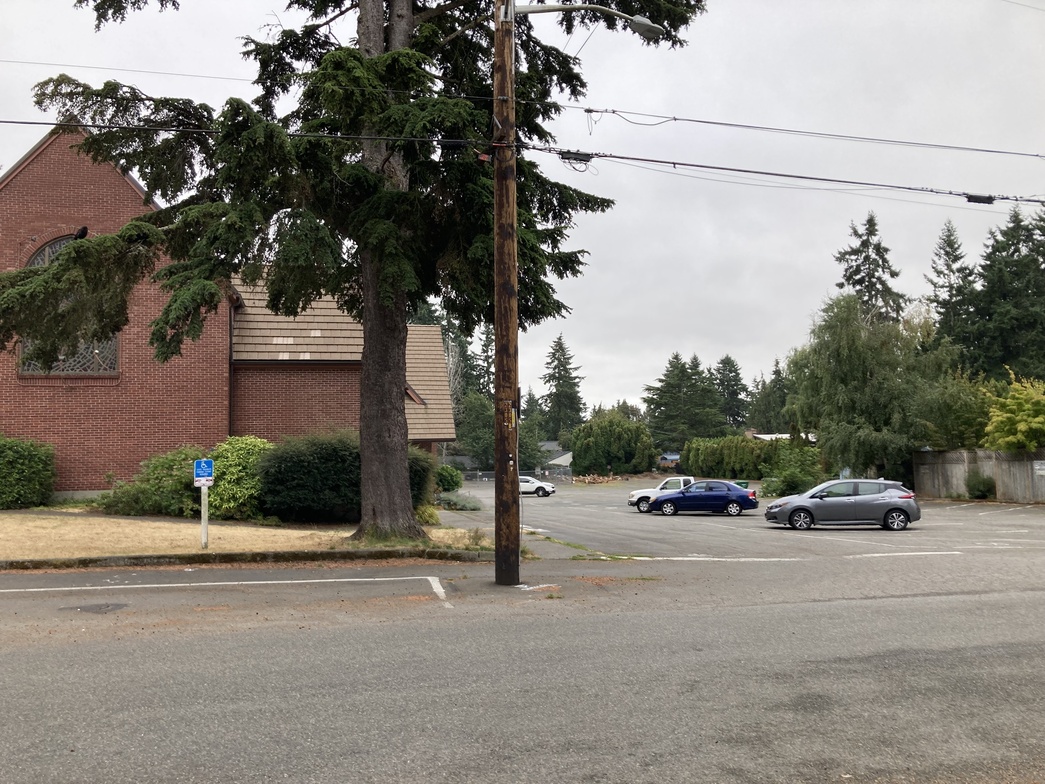
Last Tuesday, our Faithland Team met with about 25 of our neighbors to share information about the ongoing discernment that will guide changes and development of our property. Our team provided information about our work over the last four years talking with community members, other churches, congregation members, and possible development partners. We explained the criteria that our Leadership Board has delineated for the selection of a partner and the process that we are engaged in now to request information and qualifications from interested developers. We discussed with those who attended their hopes, dreams, and concerns about the increased density that is coming to our neighborhood. Through it all, we enjoyed the delicious cookies and brownies that church members provided for the event.
As a reminder, the initial criteria for selecting a development partner include:
- HLUMC will continue to have a parsonage
- The church will not own or manage housing, other than the parsonage
- Liability for housing will shift to the new owner/manager.
- Development will align with the church’s net-zero goals for carbon dioxide emissions
- Developers with experience reaching out to traditionally excluded populations desired
- Site safety part of design process
In addition, more recently, additional constraints were added and now include a scope of less than 50 units, enough parking for one space per unit of housing and more for church use, continuing to host Camp United We Stand, and continuing to prioritize green space like the P Patch.
We were able to share a best-case scenario timeline that has us receiving information and qualifications from developers in mid-November, interviewing and visiting past projects in late November and December and making a recommendation to select a partner in early 2026. At that time, there will be a congregational vote, as well as several denominational processes to ensure that the multiple stakeholders are satisfied with the selection. Once a development partner is selected, the process of creating and negotiating a mutual design could happen in 2026 and 2027. Permitting may begin in 2027 and will probably take several years. That means groundbreaking would occur no earlier than 2028.
There weren’t a lot of surprises during the conversation with neighbors. Some had questions about how neighborhoods change when zoning changes that were really not questions about the church property but more about the City’s Comprehensive Plan more broadly. Several neighbors expressed their gratitude for the thoughtful way the church has been reaching out to neighbors and keeping people informed. By the end of the evening, many people had told me that they felt the church was a good neighbor. One neighbor who felt a connection to the values of increased density and creating community even shared the name of a possible development partner that we had not been aware of previously.
The same presentation was made at United Women in Faith last week and will be shared with After 8 to 5 Group next week. If you would like more information about the presentation or have questions about the development project, please see a member of the Faithland Team (Carol Jaeger, Jon Daniel, and me) so we can hear your thoughts.